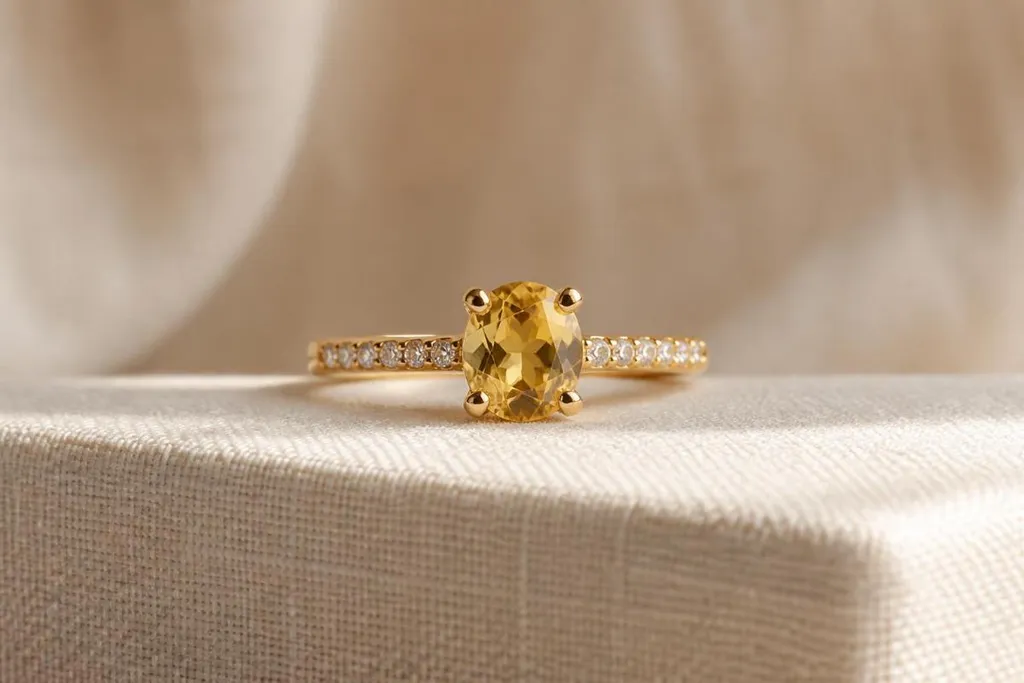
An engagement ring centred on colour can feel deeply personal, particularly when the gemstone moves beyond the familiar blues, reds and colourless tones. Yellow sapphire does exactly that. Its warm, luminous appearance brings energy to an engagement ring while retaining the durability and fine-jewellery heritage associated with sapphire.
For couples considering timeless lab grown yellow sapphire engagement rings, the appeal lies in balancing distinctive colour with an elegant, wearable design. Lab-grown yellow sapphires share the essential chemical composition and crystal structure of sapphire, while offering a bright centrepiece for everything from restrained solitaires to diamond-accented settings. Choosing successfully means paying attention to tone, cut, metal and proportion rather than colour intensity alone.
Finding the Right Shade of Yellow
Yellow sapphire can vary considerably in appearance. Some stones show a light, fresh yellow, while others have a richer golden tone. Those differences can change the entire personality of an engagement ring.
A brighter yellow may feel clean and contemporary, especially against platinum or white gold. Deeper golden shades can look particularly luxurious alongside yellow gold, where the gemstone and metal create a more tonal composition.
The most saturated stone is not automatically the most attractive choice. Personal colouring, existing jewellery and preferred wardrobe tones can all influence which shade feels natural to wear.
Lighting deserves consideration as well. A gemstone may look slightly different in daylight, warm interior lighting and evening conditions. Since an engagement ring will be worn in all of these environments, a yellow that remains appealing throughout the day is generally more important than one that looks exceptional under a single display light.
Shape Determines How the Colour Is Presented
Cut influences both the silhouette of a yellow sapphire and the way its colour appears across the stone.
Oval cuts provide an elegant elongated outline and can distribute colour across a generous face-up area. Cushion shapes offer softer proportions and work particularly well for someone who wants a romantic design with substantial presence.
Round stones provide symmetry and a familiar engagement ring silhouette, allowing the unusual colour to become the principal point of distinction. More geometric cuts can create a sharper, contemporary effect by presenting yellow within cleaner lines.
Carat weight should be considered alongside actual dimensions. Someone might choose a 2-carat yellow sapphire because a larger surface allows the colour to become the dominant feature of the ring. Another wearer may prefer a smaller centre stone surrounded by diamonds, using colour contrast to create impact instead.
The aim is not simply to maximise size, but to find a proportion that feels balanced with the hand and setting.
Metal and Diamonds Can Change the Mood
Yellow sapphire responds particularly strongly to its surroundings.
Yellow gold creates a harmonious combination, extending warm colour from the gemstone into the band. This can make the overall design feel rich and cohesive rather than sharply contrasted.
Platinum and white gold produce almost the opposite effect. Their cool appearance creates a defined boundary around the yellow centre stone, helping its colour stand out clearly. This contrast becomes even more pronounced when colourless diamonds are incorporated into the setting.
A halo can frame the sapphire with brightness and increase the ring's overall visual footprint. Diamond-set shoulders carry that sparkle along the band, while a trilogy arrangement can give the centre stone additional presence without completely surrounding it.
A solitaire offers the most restrained interpretation. With fewer competing elements, the quality of the sapphire's colour and proportions becomes especially important.
Consider Durability Alongside Appearance
Yellow sapphire is a variety of corundum and ranks 9 on the Mohs hardness scale. Its resistance to scratching makes it particularly suitable for an engagement ring intended for frequent wear.
Hardness does not make the gemstone or ring indestructible, however. Sharp impacts can still cause damage, and claws or other setting components can wear over time.
Removing the ring for heavy manual work is sensible, while gentle cleaning can prevent soap, creams and everyday residue from dulling the gemstone's appearance. Periodic professional inspections also help ensure that the stone remains securely set.
It is worth considering a future wedding band at the same stage. Setting height and gallery design will determine whether a straight band sits closely alongside the engagement ring or whether a shaped design creates a better fit.
Final Thought
Yellow sapphire engagement rings offer an unconventional use of colour without sacrificing practicality or refinement. Their warmth can be amplified by yellow gold, contrasted with white metals or framed with diamonds for a more decorative effect.
A lab-grown yellow sapphire is most compelling when its colour feels integral to the design rather than simply unusual. Choose the shade, shape and setting thoughtfully, and the result can be bright and individual while retaining the lasting character expected of an engagement ring.